
The Best Event Phone Charging Stations UK & Europe | Hire & Rental Guide
50% OFF — Limited Time! Event Phone Charging Stations UK & Europe — Free Delivery & Setup | Book Early for Peak Dates
Book your event charging stations for 2027 and receive additional FREE similar phone charging kiosk. Free delivery and setup included for eligible bookings. Terms apply — contact us for details Trusted by 10,000+ Events!.
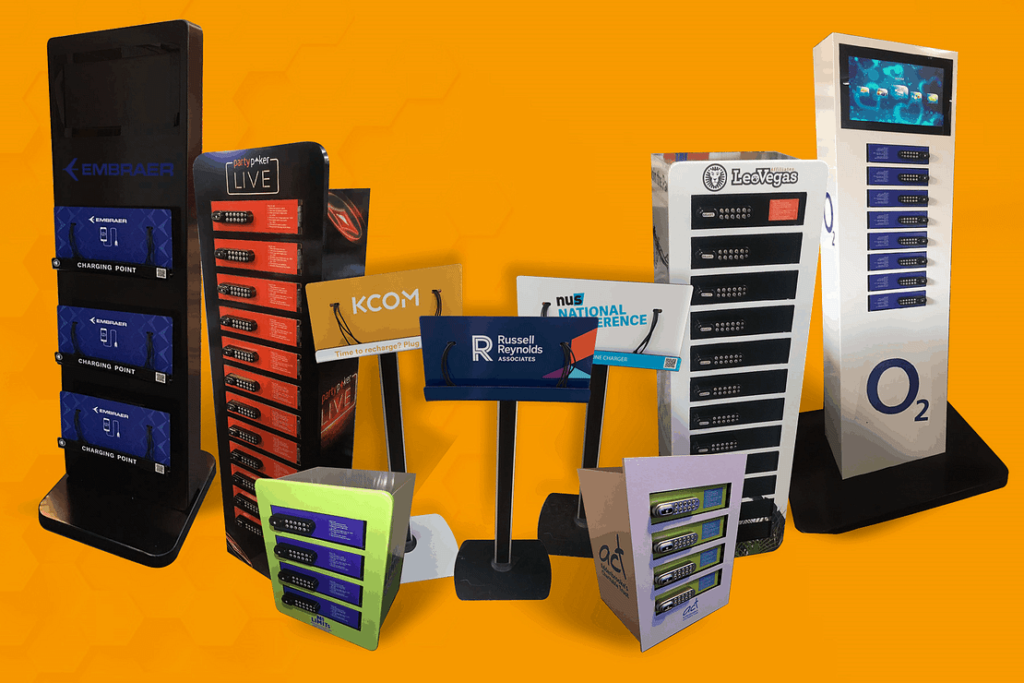
Chargezone Phone Charging stations
Introduction to Event Phone Charging Stations UK & Europe | Hire & Rental Guide
Attendees arrive at modern events in the UK and Europe mostly with phones that are already running low. They have used them on the journey to check digital tickets, plan routes, reply to messages and perhaps take photos. For international attendees, the phone also serves as a translation tool, currency converter, boarding pass wallet and a link to family and colleagues in other time zones. When the event itself depends on digital tools — QR code check-in, event apps, digital agendas, social sharing, mobile payments — a dead battery stops being a personal inconvenience and becomes an operational and attendee-experience problem.
Event organisers know this. At conference registration desks, in exhibition halls and on festival campsites, the same question comes up repeatedly: “Where can I charge my phone?”
Professional event phone charging stations are the direct answer to that question. They provide multiple charging ports, support the main device types, can be deployed as open-access stations or secure lockers, and are increasingly integrated into event branding and sponsorship strategies. For organisers running international events in the UK and Europe, understanding the planning logic behind charging infrastructure — not just “renting a few units” — is becoming part of event operations.
This guide provides a practical planning framework for international event organisers: from assessing charging demand, choosing equipment types, integrating branding and sponsorship, through to logistics coordination and supplier evaluation. It focuses on the specific considerations of UK and European event markets and explains how ChargeZone, as a specialist supplier, supports these requirements.
Section 1: Why Phone Charging Lockers and Non-lockers Has Become Essential Event Infrastructure
The smartphone is the operating system of event participation
Over the past decade, the smartphone has evolved from a convenient communication tool into the core platform for event participation. Attendees use their phones to: view digital tickets and QR codes for entry, access event apps for agendas and exhibitor information, navigate venues, exchange contact details with peers, photograph products, share real-time updates on social media, make mobile payments for food and merchandise, and arrange ride-hailing for departure.
For international attendees, the phone carries additional functions: offline maps to avoid roaming charges, translation apps to understand stand information, boarding passes and hotel bookings stored in digital wallets, and cross-time-zone communication with colleagues and family back home.
The consequence is that when a phone battery dies, an attendee’s ability to participate drops sharply. A delegate whose phone runs out on the second afternoon of a conference may be unable to check a schedule change, scan a stand QR code for materials, or exchange details with someone they just met.
“Low battery anxiety” is amplified at events
Psychologists have long noted the prevalence of “nomophobia” — the fear of being without a phone. At events, this anxiety has specific triggers: the venue is an unfamiliar environment where attendees rely on their phones for orientation and information; charging opportunities are uncertain; and the event schedule is tight, leaving no time to return to a hotel to charge.
For international events, the anxiety can be worse. Attendees may not have the right plug adapter, may be unfamiliar with local power standards, and may be reluctant to ask about charging facilities because of language barriers.
Charging facilities are becoming a baseline expectation
Conference centres and venues already provide some charging points — usually wall sockets, limited in number and randomly placed. But this “default configuration” has clear problems: far too few sockets for demand, locations often in corners or corridors rather than where attendees naturally gather, no purpose-built cable management, and no branding value.
Professional event phone charging stations are different: they are designed for high-traffic environments, provide multi-device compatible cables, have a clear visual presence, can be strategically deployed where needed, and can carry event or sponsor branding.
When organisers plan catering, seating, Wi-Fi and toilet signage, phone charging is entering the same category of consideration — not a luxury, but part of the attendee experience baseline.
Section 2: Why International Events Have Additional Charging Challenges
Device diversity and compatibility
International events naturally bring together attendees from different markets, making the device mix more varied. While iPhones and mainstream Android devices cover the vast majority of users, cable compatibility still needs to cover Lightning (iPhone), USB-C (newer Android devices and tablets) and Micro-USB (older devices). Some specialist devices, such as Apple Watch magnetic charging, may also need consideration.
ChargeZone’s charging stations are equipped with multi-cable charging options covering these connector types, and some models also support wireless charging and iWatch magnetic charging. For organisers, the key is to confirm that the supplier’s equipment covers the expected attendee device mix.
Venue scale and multi-hall operations
International events often take place in large exhibition centres with multiple halls, multiple floors, dispersed registration areas and different functional zones. A charging plan that deploys stations in only one location is insufficient for a trade show spanning three halls.
Large-venue charging demand usually requires distributed deployment: charging points in the registration area, main circulation routes, catering areas, networking spaces and sponsor zones. Each location has different demand characteristics — registration may need fast-turnaround open stations, networking areas may suit charging tables with seating, and stands within halls may choose locker formats to allow visitors to continue exploring while charging.
Multi-day events and temporary infrastructure
Festivals, multi-day conferences and touring exhibitions face different challenges. For events lasting several days, attendee charging demand accumulates — day one may only require an afternoon top-up, but by day three, phones may be in a near-constant low-battery state. Locker formats become more valuable here because they allow attendees to leave devices securely charging while continuing to participate.
Outdoor or temporary-venue events also require consideration of: power accessibility, safe cable management, weather effects on equipment (organisers should confirm specific equipment outdoor suitability with the supplier and venue), and how security processes cover supervision of charging equipment.
Logistics and venue access
Charging equipment logistics for international events involves multiple coordination points: delivery time windows are usually constrained by the venue’s build-up and breakdown schedules; loading bays may require booking at specific times; equipment entry may need to comply with the venue’s fire safety and electrical regulations; and collection after the event needs to align with the venue’s breakdown process.
For events across Europe, organisers should also confirm with the venue and appropriate local professionals: whether equipment meets local electrical standards, whether additional insurance cover is required, and whether any import or temporary-use administrative requirements apply. This article does not make assertions about specific national regulations, as requirements vary by jurisdiction and event type.
Section 3: Phone Charging Stations vs Phone Charging Lockers — How to Choose
Understanding the difference between the two main equipment formats is the first step in developing a charging plan. They solve different attendee needs and suit different event scenarios.
Open phone charging stations
Open charging stations (sometimes called non-locker charging stations, charging towers or charging tables) are built around a simple principle: plug in and stay with your device. Attendees stand or sit at the charging equipment, connect their device to a charging cable, and the device stays within sight.
The main advantages of this format are visibility and interaction. A charging station is usually a visually prominent presence — a tower unit, a table with integrated charging ports, or a wall-mounted charging panel. When attendees use it, they remain in front of the equipment for several minutes, creating a natural attention window for branding.
For event organisers, open charging stations suit: high-traffic areas requiring fast turnaround, networking spaces, sponsor stands wanting to create interaction opportunities, and any space emphasising social interaction. Without locking mechanisms, users do not occupy a spot for long, and turnover is usually higher.
Secure phone charging lockers
Charging lockers work on a different logic: each compartment is a separate, lockable space with built-in charging cables. Attendees place their phone in the compartment, lock it with a PIN code, key or RFID card, then leave to attend sessions, explore the exhibition or enjoy the event, returning later to collect a charged device.
The core value of lockers is convenience and security. Attendees do not need to wait at a charging station and can continue participating while their device charges. For multi-day event attendees, people who need to move around an exhibition for long periods, and users carrying valuable devices who have security concerns, lockers offer an experience that open stations cannot replace.
ChargeZone’s locker products offer configurations of 8, 12 and 24 compartments, with PIN code, key or RFID access, and some models include LCD screens for branding.
Comparison framework: The differences between lockable phone charging stations and standard non-locker phone charging stations.
| Dimension | Open phone charging stations | Secure phone charging lockers |
|---|---|---|
| Attendee behaviour | Stay with device while charging | Lock and leave, return later |
| Security | Device stays in sight | Device locked in compartment |
| Turnover speed | Faster (users actively finish) | Slower (depends on user return time) |
| Brand exposure | Continuously visible during use | Re-engaged when user collects |
| Best suited to | Networking areas, stands, high-traffic routes | Multi-day events, exhibitions, festivals |
| Capacity management | May be crowded at peak times | Compartment occupancy needs monitoring |
Section 4: Why Branded Phone Charging Stations Are Powerful Marketing Assets
Functional equipment combined with brand carrier
An unbranded charging station is a piece of equipment. A charging station carrying an event logo, sponsor identity or brand visuals is a marketing touchpoint.
The distinction matters because charging equipment creates a unique attention scenario: attendees actively use it rather than passively pass it. A backdrop can be ignored, a banner can be overlooked, but a device that is charging an attendee’s phone cannot be ignored — the user has a direct, functional interaction with it.
ChargeZone’s charging equipment supports comprehensive brand customisation, including full-wrap vinyl graphics, digital screen content, QR code integration and multi-brand layouts. The branding process is usually completed before the event, and equipment arrives on site ready to use.
Brand layers the equipment can carry
Charging stations and lockers can carry multiple layers of communication:
Event identity layer: The event’s own logo, theme colours and visual elements, integrating charging equipment as part of the event environment rather than an isolated third-party device.
Sponsor layer: Sponsor logos, brand messaging and calls to action. For an event selling charging as a sponsorship asset, this layer is the core of value creation.
Functional guidance layer: Usage instructions, device compatibility notes, and any safety or data protection information about charging behaviour.
Interaction layer: QR codes linking to sponsor landing pages, event app download pages, social media accounts or lead-capture forms.
A misunderstanding to avoid
Branded charging stations are not “billboards with a charging function”. Their marketing logic is built on the primacy of service: attendees first need to charge, and only then do they see the brand message. This means brand message reception occurs in a relatively positive context — the attendee has just received a useful service. This “service-first” association is psychologically different from pure advertising exposure.
Section 5: Turning Phone Charging Stations (Lockable and non lockable) Into a Sponsorship Opportunity
Free phone charging stations as a sellable sponsorship asset
For events using commercial sponsorship models — conferences, exhibitions, festivals, and large corporate events — charging infrastructure can become a standalone, sellable sponsorship asset, alongside stage naming rights, lanyard advertising, or programme book advertising.
Vip co-operate event requires standard non -locker phone charging station with sponsorship as a networking zone. Management and highend clients do not steal other peoples devices.
The core appeal of charging sponsorship is attention quality. An attendee who spends three to five minutes at a charging station has a higher level of attention than one walking past a billboard or turning a page in a programme. If brand messaging is integrated into the charging experience (for example, a QR code scan for a discount, a screen looping product video, a call to action on a locker), interaction depth can increase further.
Free phone charging stations Sponsorship models to consider
Organisers can design different charging sponsorship packages based on event scale and sponsorship tiers:
Charging zone naming sponsor: A sponsor-named “charging lounge” or “charging rest area” integrating charging equipment, seating and branded environment.
Equipment branding sponsor: Visual branding on the charging stations or lockers themselves, suitable for sponsors wanting high visibility on a relatively limited budget.
Digital screen content sponsor: Lockers or charging stations with LCD screens can play sponsor video content, offering a richer communication space than static signage.
Interactive activation sponsor: Through QR codes, NFC tags or touchscreen interfaces on charging stations, guide attendees to enter competitions, claim samples, download apps or complete surveys.
“Charging pass” model: Some events may consider sponsor-funded free charging as an attendee benefit while collecting attendee information (subject to applicable data protection regulations).
Operational value from the organiser’s perspective
From an event operations perspective, charging sponsorship has a further practical value: it can turn a cost that needs funding into an asset that generates revenue or offsets costs. Where the event has existing sponsor relationships, sponsorship sales for charging facilities can fund charging infrastructure without increasing attendee ticket prices. This article makes no guarantees or predictions about the ROI of such sponsorships, as results depend on event audience, activation quality and market conditions.
Section 6: Free Delivery and Setup — Why Turnkey Event Support Matters
Why “delivery and setup” is not a small matter in event contexts
Anyone who has shipped equipment to an event venue knows that logistics can consume disproportionate time and attention. Charging equipment raises questions including: When does equipment arrive? Who receives it? Who moves it to the designated location? Who installs and tests it? Who removes it after the event? What happens if equipment fails during the event?
For international event organisers, these questions become more complex: they may not be in the event’s country, may be unfamiliar with the venue’s loading procedures, and may have no confidence in a local supplier’s responsiveness.
ChargeZone’s free delivery and setup service, from the organiser’s perspective, removes a series of coordination burdens. Equipment arrives at the venue at the agreed time, and the supplier’s team positions it, powers it up and tests it to ensure it is operational before the event begins. Collection after the event is also handled by the supplier.
Logistics details organisers still need to confirm
Even where the supplier provides delivery and setup, organisers still need to actively confirm the following to ensure smooth logistics:
Delivery time window: What is the venue’s build-up schedule? Does equipment entry need to happen within a specific time period?
Venue access requirements: Does the venue security team need an advance equipment list? Does the loading bay require booking?
Power location and capacity: Where will charging equipment be deployed? Is suitable power nearby? Are extension leads or power distribution equipment needed?
Branding material deadlines: If custom branding is required, what is the artwork submission deadline? How long does the supplier need for production?
On-site contact: Who does the supplier contact on arrival? Is the venue aware of the delivery arrangement?
Collection time: When is equipment collected after the event? Is this coordinated with the venue’s breakdown schedule?
Questions to ask the supplier
Before final confirmation, asking the charging equipment supplier the following questions can help avoid surprises:
- What exactly does delivery and setup include? Are there any costs not included?
- If the event schedule changes, can the delivery time be adjusted?
- What is the response process if equipment fails during the event?
- Are backup units or rapid replacements provided?
- How much lead time is needed for branding production?
Section 7: Supporting UK Events from London to Scotland, Wales and Northern Ireland
Regional differences in UK event charging demand
The UK events landscape varies significantly by region, and these differences directly affect charging plan design.
London: Large venues such as ExCeL, Olympia and the Business Design Centre host high-density, international conferences and exhibitions. Attendee groups have a higher proportion of overseas visitors, device diversity is significant, and charging demand is distributed across multiple halls and functional areas. Branding and sponsorship expectations for London events are also typically higher.
Manchester: Manchester Central and surrounding venues host an event calendar spanning technology conferences to cultural exhibitions. Manchester’s attendee mix combines local professionals with international visitors, and charging demand is particularly concentrated in registration areas and networking spaces.
Birmingham: The NEC is one of the UK’s largest exhibition venues, hosting major trade shows and consumer events. The NEC’s scale means charging equipment requires distributed deployment; a single-location solution cannot cover it. Exhibitor demand for charging equipment on stands may also be above average.
Glasgow and Edinburgh: Scotland’s events market features conferences, cultural events and festivals. SEC Glasgow hosts large exhibitions, while Edinburgh’s festival season involves multiple venues and temporary sites. These scenarios place different demands on equipment flexibility and logistics coordination.
Cardiff and Belfast: The Welsh and Northern Irish events markets are relatively concentrated but still host regular conferences, exhibitions and public events. For these regions, working with a supplier covering the whole of the UK is often more efficient than finding a single local source.
Leeds, Liverpool, Bristol and other cities: These cities’ event scenes are dominated by mid-sized conferences, regional exhibitions and corporate events. A higher proportion of attendees travel same-day, meaning their phones may already be low on arrival, and charging demand may appear early in the event.
The practical value of a national supplier
For organisers running event programmes across multiple UK cities — whether touring exhibitions, multi-city conference series, or agencies delivering events for different clients across the UK — working with a supplier covering the whole country can simplify procurement and coordination. Consistent equipment standards, a uniform branding application process, and a familiar logistics rhythm reduce the burden of re-evaluating suppliers for every event.
Section 8: Supporting Events Across Europe
Additional dimensions of international event organisation
Holding events outside the UK introduces several dimensions that require additional attention. These considerations are not insurmountable barriers, but organisers need to factor them in during planning rather than leaving them to the last minute.
Venue requirements and electrical compatibility: Venues in different European countries may have different requirements for equipment electrical characteristics. Organisers should confirm with the venue and charging equipment supplier whether equipment is suitable for local use and whether any adapters or converters are needed. This article does not make assumptions about specific national electrical standards.
Logistics and delivery arrangements: Cross-border delivery may involve different timeframes and administrative requirements than domestic delivery. Organisers should confirm delivery times, any necessary documentation, and processes equipment may face at borders with the supplier.
Customs and tax: For temporarily imported equipment, organisers should consult appropriate professionals to understand applicable customs procedures, temporary import permits and tax treatment. This article makes no assertions about rules in specific jurisdictions.
Insurance: Confirm whether insurance cover extends to the event’s country and whether charging equipment requires additional insurance arrangements.
On-site support: If the supplier is not based in the event’s country, understanding what support they provide during the event (remote or on-site) is important.
ChargeZone’s European coverage
ChargeZone operates in Europe, and its European website indicates services across multiple European markets, including Germany, France, Spain, Italy, the Netherlands, Scandinavia and Eastern Europe. For organisers with event programmes across multiple European cities, this means coordinating charging equipment for multiple locations with one supplier rather than finding a different local supplier in each country.
ChargeZone’s event support pages for locations including Cannes and Denmark indicate the company has provided services for events including Cannes Lions, the Cannes Film Festival and major Danish exhibition venues. This information comes from the company’s own website, and organisers can learn more about relevant experience when requesting a quote.
Section 9: Choosing the Right Number of Charging Stations
Why there is no universal formula
Accurate prediction of event charging demand is influenced by multiple variables: total attendance, event type, the device-dependency of the attendee group, event duration, whether other charging options exist (such as attendees bringing power banks or venue-provided sockets), the convenience of charging equipment locations, and the density of the event schedule.
A plan designed for a technology conference may not suit a festival or consumer exhibition. A city-centre event with same-day attendees may have different charging behaviour patterns from a multi-day conference at a resort venue.
This article therefore does not provide a “Y devices per X people” formula. Instead, the following framework can help organisers have a more targeted discussion with suppliers.
A practical planning framework
Step 1: Assess attendees’ “likelihood of charging”
Consider: Does the event rely on an event app or digital tickets (increasing phone use)? Are attendees largely from other cities or countries (commuting and navigation drain battery)? Is the event longer than half a day? Are there obvious “waiting periods” (queues, breaks, networking sessions)?
Step 2: Consider the number of deployment locations
One charging unit serves one location. If the event has multiple dispersed attendee gathering points — registration, exhibition halls, networking areas, catering — each location needs independent charging capacity. Do not assume equipment in one location can be conveniently used by attendees in another.
Step 3: Distinguish capacity logic between open stations and lockers
The “capacity” of open charging stations depends on turnover. If average use time is 20 minutes, an 8-port charging station could theoretically serve around 24 users per hour. Locker capacity depends on how long users take to return — a locked compartment may be occupied for hours.
Step 4: Allow headroom for peak demand
Natural peaks in the event schedule — the post-opening registration rush, the post-lunch networking period, the pre-keynote check-in — concentrate charging demand. Deploying slightly more than the “average demand” estimate at key locations can reduce queuing and frustration at peak times.
The conversation with suppliers
The most valuable approach is to share these factors with the supplier and let them advise on specific quantities based on equipment characteristics and event scenario. Suppliers such as ChargeZone can typically provide specific quantity recommendations based on event scale, type and venue layout. This article explicitly characterises this framework as planning guidance rather than a precise capacity calculation.
Section 10: Where Should Charging Stations Be Located?
The core trade-off: visibility vs congestion
The location of charging equipment determines whether it is used, by whom, and whether it creates operational problems.
Registration and entrance: Attendees’ phones usually have some depletion on arrival. Placing open charging stations near registration desks provides immediate charging while attendees queue or complete information. But care is needed not to block registration flow or entrance routes.
Exhibition areas and stands: Within exhibition halls, charging stations can become a tool for exhibitors to attract visitors. A charging point deployed within a stand creates a natural reason to stop, and the exhibitor team can use charging time to engage with visitors. Open charging stations (where users stay with the device) are usually more suitable for this interaction purpose than lockers.
Networking areas: Networking sessions at conferences and exhibitions are often when charging demand is most concentrated. Deploying charging tables or stations with seating in networking areas allows attendees to continue socialising while charging.
Catering areas: Charging demand naturally rises during lunch and breaks. Placing charging points near catering areas leverages time attendees are already spending there.
Main circulation routes and intersections: High-footfall areas provide maximum visibility but also require congestion management. The fast turnover of open charging stations suits this scenario; lockers may not suit main routes because users need to return to collect.
Festivals and outdoor events: In festival contexts, charging locations need to coordinate with campsite layout, stage distribution and main circulation. Locker formats are often preferred because attendees want to store devices securely before continuing to explore.
Supporting factors
Regardless of location, the following factors affect the practical usability of charging points:
Power accessibility: The location must have suitable power access, and cable management needs to be safe (avoiding trip hazards and complying with venue electrical safety requirements).
Visibility: Charging stations need to be visible from main circulation routes. If the location is tucked away, signage is essential.
Accessibility considerations: The height and operation of charging equipment should consider different attendees’ accessibility, including wheelchair users and people with mobility impairments.
Fire safety: Equipment should not be placed in fire exits, escape routes or any “clear zones” marked by the venue.
Section 11: Phone Charging for Conferences
Charging behaviour characteristics of conference attendees
Conference attendees are typically in “mobile professional” mode. They move between sessions, attend networking events, check agenda changes, take notes, and exchange contact details with peers. The phone functions as a work tool in this scenario — checking email, managing calendars, accessing LinkedIn, scanning business cards.
Conference charging demand is characterised by intermittency and concentration. Attendees may not need to charge during a keynote, but concentrate their search for charging points during coffee breaks and networking sessions. A charging station located in the networking area rather than inside a session room will usually have far higher utilisation.
The natural fit between open charging stations and networking
For conference scenarios, open charging stations have a unique advantage: they create a natural social node. When attendees pause at a charging station, they are in a “waiting state” — a context where conversation can start easily. ChargeZone’s guides suggest exhibitors and event teams leverage this by training staff to proactively engage with attendees near charging points rather than leaving users standing silently.
An open charging table with some seating can become one of the most productive positions in a networking area — attendees can continue conversations while charging, rather than leaving early due to battery anxiety.
The role of lockers at conferences
For all-day or multi-day conferences, lockers offer attendees a “set and forget” charging option. Attendees can place their phone in a locker in the morning, attend the full day’s programme, and collect a fully charged device in the afternoon or at the end. This removes the pressure of searching for charging opportunities throughout the day.
For speaker lounges or VIP areas, lockers can be a practical addition, meeting the device charging needs of speakers, VIPs and staff.
Section 12: Phone Charging for Exhibitions and Trade Shows
The exhibitor’s perspective
For exhibitors, the core value of charging equipment is creating a reason to stop. In an exhibition with hundreds of competing stands, getting visitors to pause is a constant challenge. A stand offering free charging functions as a “low-friction inbound hook”.
Open charging stations are usually more effective than lockers in stand scenarios for a simple reason: users stay with the device, creating natural interaction opportunities for the exhibitor team. A visitor standing at a charging station has accessible attention — they are not walking, their phone is charging, and they are in a “waiting” rather than “moving” state.
Turning charging into conversation
Charging equipment itself does not generate conversation; it creates the conditions for it. ChargeZone’s exhibition guides suggest exhibitors train teams to proactively approach waiting visitors near charging points rather than letting charging become a silent, functional pause.
A simple opener — “Have you found what you were looking for today?” or “Is your phone battery holding up?” — can turn a purely functional charging act into a potential customer conversation. If the stand has a QR code or samples, charging time is also a natural window for a call to action.
Stand design integration considerations
If exhibitors plan to incorporate charging equipment into stand design, the following need to be considered during stand approval:
- Is the charging equipment’s power requirement included in the stand’s electrical plan?
- Does the equipment location avoid fire exits and escape routes?
- Does cable management comply with venue safety requirements?
- Does the charging equipment coordinate with the stand’s overall visual design?
ChargeZone’s stand installation guides cover these practical operational aspects, including recommending checking charging equipment cables and sockets during daily safety walks.
Section 13: Phone Charging kiosk for Festivals and Large Outdoor Events
The particularities of festival scenarios
Festival attendees’ device usage patterns differ sharply from conference or exhibition attendees. Festivals are high-intensity social and experiential scenarios: frequent photography and video, coordinating locations with friends via messaging apps, using event apps to check performance schedules, sharing real-time updates on social media. For a festival lasting three to five days, phone battery management becomes an almost constant source of anxiety.
Additionally, in festival contexts, phones also serve a safety function: reconnecting with friends after getting separated, contact in emergencies, and arranging ride-hailing or public transport on departure. A dead phone at a festival can mean a practical safety risk.
The advantages of lockers at festivals
For festivals, charging lockers are usually preferred over open charging stations. Reasons include:
Event nature: Festival attendees do not want to be tethered to a charging station. They want to store their phone securely, enjoy the music, buy food, interact with friends, and collect it when convenient.
Multi-day use: At a festival lasting several days, attendees may need to charge every day. The locker’s “set and forget” model suits this usage rhythm better.
Security: In crowded outdoor environments, carrying a phone on your person is not without risk. Lockers provide a secure storage point.
Weather protection and outdoor suitability: Outdoor events place additional demands on equipment protection. Organisers should confirm equipment outdoor suitability with the supplier and venue, and whether additional shelter or protection is needed. This article makes no assumptions about equipment outdoor protection ratings.
ChargeZone’s festival guides discuss charging solutions for multi-day festivals, recommending a deployment model of “multiple locker groups, staffed, covering campsites and event areas”.
Practical considerations for outdoor deployment
When deploying charging equipment outdoors or at temporary sites, organisers need additional consideration of:
- Power stability and accessibility
- Equipment fixing and stability (wind resistance, impact protection)
- Outdoor-grade cable management (waterproofing, trip prevention)
- Night-time visibility and lighting
- Staff supervision and assistance in charging areas
Section 14: Phone Charging Lockers for Corporate Events and Brand Activations
Charging scenarios for corporate events
Corporate events — product launches, employee conferences, award ceremonies, press events, client appreciation events — have charging needs closely tied to corporate brand management.
In these scenarios, charging equipment is first and foremost part of the service brand experience. An organiser providing free charging facilities at a corporate conference sends the signal: “We have considered attendees’ practical needs.” That signal itself has brand value.
Second, charging equipment is a carrier of brand consistency. A charging station carrying corporate visual identity, alongside other event brand elements (backdrops, signage, name badges), forms a unified visual environment. The quality of brand application — colour accuracy, logo clarity, material quality — affects attendees’ overall perception of event professionalism.
Charging applications in brand experience scenarios
Product launches: Charging stations can carry new product visual messaging or form part of a product demonstration (for example, demonstrating device compatibility with the charging station).
Employee events: Charging facilities at internal events can reinforce corporate culture messaging or serve as a carrier for internal communications (for example, corporate videos or internal event promotions on screens).
Client events: In client appreciation or relationship-management scenarios, charging facilities are a thoughtful additional service that can integrate with gift or catering offerings.
Award ceremonies: Attendees may need to charge during long ceremonies, and award ceremony brand environments typically place high importance on visual consistency.
Section 15: Phone Charging Stations for International Brand Activations
Brand consistency across multi-city activations
For brand experience campaigns executed across multiple cities or countries — product tour launches, mobile showcases, multi-city consumer activations — charging equipment can become a replicable, scalable element of the brand environment.
Consistency is the core challenge: if a campaign uses one type of charging equipment in London, another in Paris and a third in Berlin, the coherence of the brand experience suffers. Working with a supplier covering multiple markets allows standardised equipment types and branding application processes across locations.
Integrating from function to experience
In international brand experience scenarios, charging equipment should not be treated as an isolated “functional corner” but integrated into the overall design of the event experience. This means:
Visual integration: Brand application on charging equipment follows the campaign’s master visual guidelines rather than existing as an independent design object.
Spatial integration: The location and layout of charging areas coordinate with the event’s circulation design and functional zoning, rather than placing equipment in a leftover space.
Interaction integration: If the event has digital interaction elements (QR code challenges, social media walls, lead capture), charging equipment can serve as a physical access point for these interactions.
Narrative integration: In some activation scenarios, the charging function can be linked to the brand story — for example, a brand emphasising “uninterrupted connection” or “staying in touch wherever you are”.
Timeline for branding materials
Brand application for international events involves additional production and logistics time. Organisers should confirm with the supplier: artwork specifications and templates, branding production deadlines, and whether branding materials need cross-border shipping or can be produced in the event location. Late artwork submission can compress production time or lead to last-minute compromises.
Section 16: What to Look for When Hiring an Event Charging Supplier
The following checklist helps organisers cover key considerations when evaluating suppliers. It is worth raising these questions at the quotation stage to enable meaningful comparison.
Equipment and capability
| Evaluation dimension | What to confirm |
|---|---|
| Equipment types | Are both open charging stations and lockers available? Are there different capacity specifications? |
| Device compatibility | Do cables cover Lightning, USB-C, Micro-USB? Is wireless charging and smartwatch charging supported? |
| Locker security | What is the locking mechanism (PIN, key, RFID)? Is there a master code or backup opening method? |
| Brand customisation | What branding options are included (full wrap, screens, QR code space)? What is the production lead time? |
| Equipment durability | Is equipment designed for high-traffic environments? What are the materials and construction? |
Logistics and service
| Evaluation dimension | What to confirm |
|---|---|
| Delivery | Which areas are covered? Is it included in the price? |
| Setup | Is setup included? Who performs it? How long does it take? |
| Collection | What are the post-event collection arrangements? Is it coordinated with the breakdown schedule? |
| Technical support | What is the response process for equipment failure during the event? Are backup units available? |
| Insurance | What insurance cover does the supplier have? Does the organiser need additional cover? |
| Venue coordination | Does the supplier have experience coordinating with venues? Who liaises with the venue? |
Commercial terms
| Evaluation dimension | What to confirm |
|---|---|
| Pricing structure | How is price calculated (per device, per day, per event)? What services are included? |
| Lead times | What is the recommended booking lead time? What is the branding customisation deadline? |
| Cancellation policy | What are the terms for cancelling or changing an event? |
| Payment terms | What is the payment schedule and method? |
Relevant experience
| Evaluation dimension | What to confirm |
|---|---|
| Event type experience | Has the supplier served similar event sizes and types? |
| European/international experience | Does the supplier support cross-border events? What experience do they have in the event’s country? |
| Client references | Can relevant event references be provided (subject to confidentiality requirements)? |
Section 17: How Much Does Event Phone Charging Station Hire Cost?
Why pricing varies by event
This article does not provide specific price figures because event charging equipment hire pricing is influenced by multiple event-specific variables. A one-day conference at a Manchester hotel meeting room is entirely different in equipment and logistics complexity from a four-day international trade show at a Barcelona exhibition centre.
The main factors affecting price include:
Equipment quantity and type: Open charging stations and lockers have different unit prices. Lockers (especially models with digital locks and screens) typically involve higher equipment costs.
Event duration: Hire pricing is usually related to event days. Multi-day events mean a longer equipment use period.
Location and logistics: Delivery distance, cross-border logistics, and the complexity of venue access all affect total cost.
Brand customisation: If branding application is required, this involves additional design, production and installation work.
Additional services: On-site support staff, backup equipment, and non-standard installation times (such as night-time access) may incur additional costs.
Why a “tailored quote” is more meaningful than an “online price”
For an event that needs planning, a tailored quote based on specific requirements is more useful than a generic “from” price. What organisers need to know is: for my event size, location, dates and branding requirements, what is the total cost, what services are included, and what potential additional costs exist.
ChargeZone’s website indicates that the company provides a tailored quotation process based on specific event requirements rather than a single standardised price. The more specific the information organisers provide at the enquiry stage — attendee numbers, event type, venue layout, dates, branding requirements — the more accurate the quote will be.
Section 18: Hire vs Buy — Which Is Better for International Events?
When hiring makes sense
For most one-off or occasional international events, hiring is the more practical choice:
Event frequency: If the event is annual, or tours different cities, hiring each time avoids the burden of equipment storage and transport.
Scale variation: Event size and layout may change year on year. Hiring allows equipment numbers to be adjusted to current requirements each time.
Logistics complexity: The supplier handles equipment delivery, setup, support and collection; organisers do not need to manage cross-border equipment transport.
Technology updates: Charging technology (such as new charging standards) may evolve. Hiring means current-standard equipment each time.
Cost structure: Hiring converts capital expenditure into operational expenditure, which is more convenient for organisers whose budget cycles align with event cycles.
When buying makes sense
Buying may make more sense in the following scenarios:
High-frequency use: If an organiser runs multiple events in a year and equipment can be reused between events, the amortised cost of purchase may be lower than multiple hires.
Permanent or semi-permanent installation: Venues, universities, corporate campuses and similar settings that need to provide charging facilities continuously are better served by purchase than repeated hire.
Specific branding requirements: If equipment branding requires a very specific or complex design and the equipment will be used long-term, purchase may offer greater control.
Long-term cost consideration: For organisations certain to use charging equipment over multiple years, purchase eliminates repeated hire fees but requires responsibility for storage, maintenance and insurance.
Recommendation for international events
For organisers running events in the UK and Europe, if the event is temporary (even if repeated annually), hiring is usually the more practical choice for international events. The logistics of transporting, storing and maintaining charging equipment across borders — particularly for events in different countries — are substantial. A supplier with UK and European coverage can provide equipment, branding, delivery, setup and collection as a turnkey service, allowing organisers to focus on the event itself rather than equipment logistics.
For venues, agencies or organisers with a permanent or semi-permanent need, purchase may be worth evaluating. The decision should be based on a realistic assessment of storage capacity, maintenance responsibility, and the frequency and locations of use.
Section 19: The Complete Event Charging Planning Checklist
This checklist is organised by timeline. It is intended as a practical planning tool for international events in the UK and Europe.
8–12 weeks before the event
- □ Estimate expected attendance and attendee profile (domestic vs international, device mix)
- □ Determine event type and duration (single-day, multi-day, outdoor, indoor)
- □ Identify potential charging locations (registration, exhibition halls, networking areas, catering, outdoor zones)
- □ Assess venue power availability at potential charging locations
- □ Research charging equipment options (open stations vs lockers, capacity, branding)
- □ Contact suppliers for availability and indicative pricing
- □ Confirm venue requirements for equipment delivery, setup and collection
- □ If branding is required, determine artwork requirements and deadlines
- □ If selling charging as sponsorship, begin sponsor conversations
4–8 weeks before the event
- □ Select supplier and confirm equipment quantity and types
- □ Confirm branding specifications and submit artwork (or agree submission deadline)
- □ Confirm delivery date, time window and venue access requirements
- □ Confirm setup requirements (who, when, how long)
- □ Confirm power requirements and any additional equipment needed (extension leads, distribution)
- □ Confirm collection arrangements
- □ Coordinate with venue on equipment location plan
- □ If applicable, finalise sponsor branding requirements and approvals
- □ Confirm insurance arrangements
2–4 weeks before the event
- □ Confirm final equipment list and quantities
- □ Confirm branding production is on track
- □ Confirm delivery logistics (vehicle access, loading bay booking, on-site contact)
- □ Confirm setup schedule with venue
- □ Brief event staff on charging equipment locations and usage
- □ Include charging locations in event app or printed maps
- □ Confirm signage requirements (wayfinding to charging areas)
- □ Confirm backup arrangements if equipment fails
Event week
- □ Confirm final delivery time with supplier and venue
- □ Ensure on-site contact is available to receive equipment
- □ Confirm setup is completed and equipment is tested
- □ Check all charging cables and connectors are functional
- □ Verify branding is correctly applied
- □ Brief staff on equipment locations and troubleshooting
- □ Confirm collection time with supplier and venue
Event day
- □ Monitor charging equipment usage and queuing
- □ Check equipment is operational at start of each day
- □ Replenish any consumables (if applicable)
- □ Address any equipment issues promptly
- □ Collect attendee feedback on charging facilities
After the event
- □ Confirm equipment collection has taken place
- □ Ensure venue is informed of collection completion
- □ Debrief with supplier on performance
- □ Record data on usage and attendee feedback for future planning
- □ If applicable, follow up with sponsors on charging sponsorship performance
- □ Begin planning charging requirements for next event
Section 20: Common Mistakes Event Organisers Make
Leaving charging until the last minute
The mistake: Charging is added to the event plan in the final weeks, leaving limited time for supplier selection, equipment availability, branding production and logistics coordination.
The solution: Include charging in the initial event planning discussions. Treat it as part of the attendee experience infrastructure, alongside catering and Wi-Fi.
Underestimating demand
The mistake: Assuming a small number of charging points will suffice, or that attendees will bring their own power banks.
The solution: Use the planning framework in Section 9 to estimate demand. Consult the supplier on quantities based on event type and profile. Over-provision slightly at peak locations rather than under-provisioning.
Choosing the wrong equipment type
The mistake: Using open charging stations at a multi-day festival where attendees want to leave devices, or using lockers at a networking event where interaction is the goal.
The solution: Match equipment type to attendee behaviour and event scenario. Use the comparison in Section 3 as a starting point.
Forgetting secure storage
The mistake: Providing only open charging, leaving attendees with valuable devices exposed or forcing them to hold their phone while charging.
The solution: Consider a mix of open stations and lockers. Lockers are particularly valuable for multi-day events and high-value device scenarios.
Poor placement
The mistake: Placing charging equipment in leftover spaces, corners or areas with low footfall.
The solution: Position charging points where attendees naturally gather or pause. Prioritise visibility and accessibility.
Weak signage
The mistake: Deploying excellent charging equipment but not telling attendees where it is.
The solution: Include charging locations in the event app, printed maps and on-site signage. Use consistent visual language.
Ignoring branding deadlines
The mistake: Deciding to add branding late in the process, missing artwork deadlines or accepting rushed production.
The solution: Confirm branding requirements and deadlines with the supplier early. Build artwork production into the event timeline.
Not checking venue access
The mistake: Assuming equipment can be delivered and set up without venue coordination, then encountering access restrictions.
The solution: Confirm delivery time windows, loading bay procedures, access requirements and on-site contacts with the venue in advance.
Not checking power requirements
The mistake: Arriving on site to discover the chosen charging locations lack suitable power access.
The solution: Confirm power availability at each charging location with the venue. Identify any need for extension leads or distribution equipment.
Failing to brief staff
The mistake: Event staff do not know where charging equipment is located or how to help attendees use it.
The solution: Include charging locations in staff briefings. Provide basic troubleshooting knowledge.
Treating charging as an afterthought
The mistake: Viewing charging as a “nice to have” rather than part of the attendee experience infrastructure.
The solution: Elevate charging to the same planning category as Wi-Fi, seating and catering. Consider its role in attendee satisfaction and sponsor value.
Assuming all European venues have identical requirements
The mistake: Applying UK assumptions to European events without confirming local requirements.
The solution: Confirm venue requirements, electrical compatibility, logistics and any administrative requirements with the venue and appropriate local professionals for each event location.
Section 21: Frequently Asked Questions
1. Can I hire phone charging stations for an event?
Yes. Phone charging stations and lockers are available for hire for events including conferences, exhibitions, festivals, corporate events and brand activations. Suppliers such as ChargeZone provide event hire with delivery, setup and collection.
2. Can phone charging stations be branded?
Yes. Charging stations and lockers can be branded with event logos, sponsor logos, campaign visuals, brand colours, messaging and QR codes. Branding is typically applied before the event and equipment arrives ready to use.
3. Can charging lockers be branded with a sponsor’s logo?
Yes. Charging lockers can carry sponsor branding, including full-wrap graphics and screen content on models with LCD displays. This makes lockers a viable sponsorship asset.
4. How much does phone charging station hire cost?
Pricing varies based on equipment quantity and type, event duration, location, delivery requirements, branding and additional services. A tailored quote based on specific event requirements is more useful than a generic price. Contact a supplier with your event details for an accurate quote.
5. How many charging stations does my event need?
There is no universal formula. The number depends on attendance, event type, duration, venue layout, attendee device dependency and the number of charging locations. Share your event details with a supplier for a tailored recommendation.
6. Are phone charging lockers secure?
Reputable charging lockers use PIN codes, keys or RFID access to secure each compartment. Attendees lock their device and retain control of access. Organisers should confirm the specific security features with the supplier.
7. Can attendees leave their phones in charging lockers?
Yes. This is the primary purpose of charging lockers. Attendees place their device in a compartment, lock it, and return later to collect a charged device.
8. What phones can be charged?
Professional charging stations typically support Lightning (iPhone), USB-C (newer Android devices and tablets) and Micro-USB (older devices). Some models also support wireless charging and smartwatch charging. Confirm compatibility with the supplier based on your expected attendee device mix.
9. Can iPhones and Android phones use the same station?
Yes. Multi-cable charging stations include connectors for both iPhone and Android devices. Some stations have dedicated cables for each connector type; others allow attendees to use their own cable.
10. Can charging stations be used at exhibitions?
Yes. Charging stations are used at exhibitions and trade shows to attract visitors to stands, create dwell time and support lead generation. Open charging stations are often preferred for stand environments because users stay with the device.
11. Can charging stations be used at festivals?
Yes. Festivals use both open charging stations and lockers. Lockers are often preferred for multi-day festivals where attendees want to store devices securely while enjoying the event.
12. Can charging stations be used at conferences?
Yes. Conferences use charging stations in networking areas, registration areas and breakout spaces. Charging can support delegate productivity and enhance the networking experience.
13. Can charging stations be used outdoors?
Some charging equipment is suitable for outdoor use, but this depends on the specific model and conditions. Organisers should confirm outdoor suitability, weather protection and power arrangements with the supplier and venue. This article does not make assumptions about specific equipment outdoor ratings.
14. Does ChargeZone deliver to event venues?
ChargeZone provides delivery to event venues as part of its event hire service. Organisers should confirm delivery coverage and arrangements for their specific event location when requesting a quote.
15. Is setup included?
ChargeZone’s event hire service includes setup. Organisers should confirm exactly what setup includes and any potential additional requirements for their event.
16. Is delivery free?
ChargeZone promotes free delivery and setup for eligible event bookings. Organisers should confirm the specific terms, eligibility and any geographical limitations when requesting a quote, as these may vary.
17. Can I hire charging stations for one day?
Yes. Charging stations can be hired for single-day events. Pricing and minimum requirements may vary. Contact the supplier with your event details.
18. Can charging stations be used for European events?
Yes. ChargeZone operates in Europe and supports events across multiple European markets. Organisers should confirm specific arrangements for their event location, including logistics and any local requirements.
19. How early should I book?
For standard equipment without custom branding, a few weeks’ notice is often sufficient. For events requiring custom branding, more lead time is needed for artwork production. For large events or peak periods, earlier booking is advisable. Confirm recommended lead times with the supplier.
20. Can charging stations be sponsored?
Yes. Charging stations and lockers can be sponsored. Sponsorship models include equipment branding, charging zone naming, digital screen content and interactive activations. Organisers can sell charging as a sponsorship asset.
21. Can I put QR codes on the charging station?
Yes. QR codes can be applied to charging stations and lockers, linking to sponsor landing pages, event apps, social media or lead capture forms. This is a common branding and activation element.
22. What’s the difference between a charging station and charging locker?
A charging station is an open-access unit where attendees stay with their device while it charges. A charging locker is a secure compartment where attendees lock their device to charge and return later to collect it. Stations offer visibility and fast turnover; lockers offer convenience and security.
23. Do charging stations need mains power?
Yes. Charging stations and lockers require a mains power connection. Organisers should confirm power availability at intended locations with the venue and discuss any additional power distribution requirements with the supplier.
24. Can a charging station be incorporated into an exhibition stand?
Yes. Charging stations can be integrated into exhibition stand designs. This should be coordinated with the stand builder and included in the stand’s electrical plan and safety approval process.
25. What information do I need to provide to get a quote?
To receive an accurate quote, provide: event type, date, venue and location, expected attendance, event duration, number of charging locations, equipment preferences (stations, lockers or both), branding requirements, and any specific logistics considerations. The more detail you provide, the more accurate the quote.
Section 22: Why Choose ChargeZone for International Events?
ChargeZone is a specialist provider of event phone charging solutions for the UK and European markets. The company’s offering is built around the practical needs of event organisers: equipment designed for high-traffic environments, flexible hire terms, custom branding, and delivery and setup support.
Equipment range
ChargeZone provides both open charging stations and secure charging lockers, covering different event scenarios and attendee needs. Charging stations support modern mobile devices with Lightning, USB-C and Micro-USB connectors, and some models also support wireless charging and smartwatch charging. Lockers are available in 8, 12 and 24 compartment configurations with PIN code, key or RFID access.
Branding and sponsorship support
ChargeZone supports custom branding for events and sponsors, including full-wrap graphics, digital screen content and QR code integration. This allows organisers to integrate charging equipment into event identity and to sell charging as a sponsorship asset.
Event hire with logistics support
ChargeZone provides event hire with delivery and setup, reducing the logistics burden on organisers. Collection after the event is also arranged. The company promotes free delivery and setup for eligible bookings, subject to current terms and availability.
UK and European coverage
ChargeZone supports events across the UK and operates in Europe, with services across multiple European markets. For organisers running events in different cities or countries, this provides a consistent supplier relationship rather than the need to source locally in each location.
Focus on event charging
ChargeZone’s business is focused on event phone charging solutions. This specialisation means the company understands the specific requirements of event environments: high traffic, temporary deployment, branding requirements, logistics coordination and attendee experience.
For international event organisers evaluating charging suppliers, ChargeZone offers a combination of specialist equipment, branding capability and event logistics support that addresses the core requirements of modern events.
Section 23: How to Book Phone Charging Stations for Your Event
Booking phone charging stations for your event follows a straightforward process. The key is to provide clear information about your event so the supplier can recommend the right solution and provide an accurate quote.
Step 1: Tell ChargeZone about your event
Provide the basic details: event type (conference, exhibition, festival, corporate event, brand activation), event name if applicable, and a brief description of what you are planning.
Step 2: Provide venue and date
Share the event venue and location, event dates and duration, and any information about venue access or logistics that may be relevant.
Step 3: Give expected attendance
Provide expected attendance numbers. If you have a breakdown by attendee type (domestic vs international, delegates vs exhibitors vs visitors), this helps with equipment recommendations.
Step 4: Explain the event type
Describe the event format: indoor or outdoor, single or multi-hall, single or multi-day, seated or standing, any specific attendee behaviour patterns.
Step 5: Discuss charging requirements
Share your thoughts on charging: how many locations you are considering, whether you prefer open stations, lockers or a mix, whether you want branding, and any specific requirements or concerns.
Step 6: Select stations or lockers
Based on your requirements, ChargeZone will recommend specific equipment types and quantities. You can discuss the options and refine the selection.
Step 7: Submit branding
If you require custom branding, provide artwork according to the supplier’s specifications and deadlines. This may include event logos, sponsor logos, brand colours and any messaging or QR codes.
Step 8: Confirm logistics
Confirm delivery date and time, setup arrangements, venue access requirements, power availability, collection time, and on-site contacts.
Step 9: Arrange delivery and setup
ChargeZone delivers equipment to the venue, positions it according to the agreed plan, powers it up and tests it. Equipment is ready for use before the event begins.
Step 10: Use the charging stations during the event
Charging stations and lockers are available for attendees throughout the event. Event staff should be briefed on locations and basic usage.
Step 11: Arrange collection
After the event, ChargeZone collects the equipment. This is coordinated with the venue’s breakdown schedule.
GET 50% OFF -Phone Charging Stations for Your Event in Europe & UK
Planning an international conference, exhibition, festival or corporate event? Speak to ChargeZone about branded phone charging stations or secure charging lockers, and discuss delivery, setup, branding and event requirements. Whether you are organising a single event in London or a multi-city programme across Europe, ChargeZone can help you plan a charging solution that supports attendee experience and event operations.