
How to Sponsor Phone Charging Kiosk at UK Events in 2027
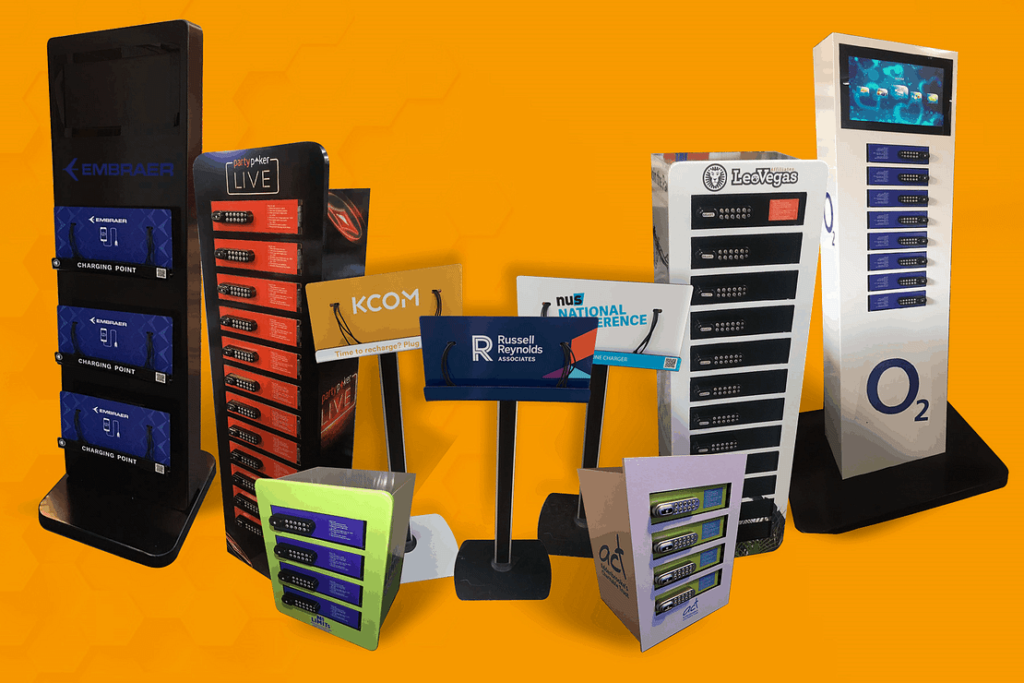
UK Event Exhibitions Sponsorship Ideas for 2027: Branded Phone Charging Lockers & Non Lockers
A branded phone charging station can be both a useful attendee facility and a sponsor activation. An organiser can hire charging equipment for a conference, exhibition or other event, then offer a sponsor the option to fund or brand it. The right choice depends on the event audience, floorplan, venue rules, equipment format and agreed commercial rights. Chargezone’s website describes event phone charging station hire, rental and customised branding, including charging lockers; exact models, availability, configuration and terms should be confirmed for each enquiry. –
This guide explains how organisers and sponsors can evaluate the opportunity for 2027 events in England, Wales and Scotland. It separates confirmed event facts from potential prospects, and it does not assume that Chargezone supplies or sponsors any event named here.
1. Why 2027 is an opportunity for event and exhibitiojn sponsorship
A full event day can involve registration, an event app, digital tickets, maps, meeting messages, QR codes, photography and social sharing. These are familiar uses of a smartphone, but the precise mix varies by event and audience. Rather than asserting that every attendee depends on a phone all day, organisers can start with a simpler planning question: what services do attendees actually need at this event, and which of them could be made more useful through a sponsor-funded facility?
Charging is one possible answer. It does not replace Wi-Fi, clear signage, accessible layouts or a strong programme. It can complement them by giving attendees a designated place to recharge a device. A station or locker may also create a physical brand touchpoint if the organiser has the right to sell or allocate that branding. Its value is therefore twofold: service design for the organiser and a relevant activation for the sponsor.
That combination matters when an organiser is building a sponsorship inventory. Headline naming rights and stage branding may not suit every budget or category. Smaller, functional assets can create additional options, provided they are useful, visible in a legitimate event area, easy to operate and described honestly. A charging unit should not be sold as guaranteed audience reach. It is a facility with a possible branded surface and a measurable interaction plan, not a substitute for an overall sponsorship strategy.
The UK exhibition market offers context for this planning. Oxford Economics estimated that 1,145 exhibitions took place in 2024, involving about 7.2 million visitors and 132,000 exhibitors. The study estimates £5.1 billion in direct spending. These are estimates for exhibitions under the study’s definition, not a count of every conference or a forecast for 2027. They should not be used to infer the audience size of an individual show.
For event teams preparing for 2027, the practical opportunity is to treat the amenity as an intentional piece of inventory early enough to resolve rights, artwork, power, access and reporting. For sponsors, it is to select events where charging has a credible relationship to the audience or the brand’s role. A transport-energy company may have an obvious infrastructure connection; a general consumer brand may need a clear audience rationale rather than a logo-only placement.
Chargezone’s public pages describe event hire/rental and customised branding, and list several charging formats. The article links to those pages for enquiries but does not treat every product, offer or service promise on them as a guaranteed package. The published pages contain different promotional terms and lack several details buyers need; read the publication checklist before relying on a specific offer or model.
2. What are event and exhibition sponsorship opportunities?
Event sponsorship is a commercial arrangement in which a brand provides money, products, services or other agreed value in exchange for defined rights associated with an event. The organiser may use the revenue or in-kind support to fund delivery, improve the attendee offer or add production value. The sponsor receives the agreed exposure or participation rights. The precise exchange should be written into a contract or sponsorship schedule: a general promise of “visibility” is not a clear deliverable.
Typical inventory can include headline or category sponsorship, session or stage sponsorship, exhibition stands, registration or welcome areas, networking spaces, delegate amenities, event-app placements, digital advertising and experiential activations. A charging installation can sit alongside those assets as an attendee amenity, potentially in a foyer, networking lounge, exhibition aisle or other approved location. It may be sold as a standalone item, bundled into a package, or provided through a sponsor-funded arrangement.
The venue, organiser, event owner and exhibitor may control different rights. For example, a venue may sell building-wide digital signage while the event organiser controls the sponsor wall and event app. A charging unit placed in a shared concourse may need venue permission as well as the event organiser’s approval. The organiser should identify the rights-holder and confirm that the sponsor can use the proposed branding, placement, category exclusivity and any QR call to action.
A charging installation is not automatically exclusive, staffed, connected to event Wi-Fi, able to collect data, or integrated into an app. Those are separate specifications and permissions. A sound inventory description makes clear what is included, what is optional, who operates it and what evidence will be reported afterwards.
3. Why branded charging can be a useful sponsorship asset
A service before an advert
A useful facility starts with an attendee problem or convenience, not the sponsor logo. If the audience has long sessions, a large venue or a multi-hour exhibition, an organiser might consider charging as one element of the facilities mix. It should be assessed alongside existing venue services, expected event flow and any other charging provision. ExCeL London’s visitor guide, for example, lists paid power-bank rental at boulevard locations, showing why planners need to check what the venue already provides before proposing an additional service. This is a venue-specific fact, not evidence that all venues offer the same service.
A charging facility can be branded on approved panels, a locker zone or other surfaces available on the selected equipment. The sponsor may also fund the service so that attendees can use it without an additional charge, if that is the agreed operating model. The organiser should make the terms visible: whether use is free, whether a deposit or app is required, whether users leave devices in a locker, and whom to contact if there is a problem.
A physical touchpoint with a defined role
A charging point has a location and purpose. The sponsor’s message can explain why it is supporting the amenity, direct interested attendees to a landing page or invite a follow-up conversation. A QR code can be considered if the unit, artwork and venue rules allow it, but the organiser should test the link and make clear what happens when it is scanned. A QR code is a route to an interaction, not proof of attention, consent or a qualified lead.
The physical installation might also give a sponsor a distinctive presence outside the conventional exhibition stand. That does not mean it will increase dwell time, sales, recall or attendance. Those outcomes would need suitable evidence. Before making such claims, agree what “interaction” means, how it will be counted and what limitations apply.
A possible route to additional inventory
Organisers often need to balance sponsor visibility with a coherent visitor experience. Charging can be one potential amenity-level asset in the portfolio, alongside Wi-Fi support, cloakroom, water refill, quiet space or networking facilities. Whether it is saleable depends on the event, venue rights, sponsor category conflicts and the event’s audience. A charging product that is poorly placed or unavailable when needed can undermine rather than improve the experience.
UFI’s 2026 Global Exhibition Barometer surveyed 378 exhibition companies in 57 countries and regions, including the UK. It reported that 37% of respondents saw a need to improve exhibition format overall, while 58% said the need depended on show type. Among improvement priorities, visitor participation/engagement and more interactive learning formats each received 22% of selections. These are global company respondents’ views, not UK attendee preferences and not evidence that a charging installation improves engagement. They do support the broader planning point that event format and participation are live industry considerations.
4. Sponsorship and planning priorities for 2027
A practical 2027 plan connects the brand idea, audience, venue and measurement before anyone orders equipment. Three priorities are particularly useful.
Design for a real attendee need. Start with the event journey: arrival, registration, session breaks, exhibition browsing, networking and departure. Identify where device charging would be useful and whether the venue already supplies an adequate alternative. A charging unit should not block accessible routes or compete with a critical registration queue. ExCeL’s event research, based on interviews with more than 300 delegates, organisers and agencies, reported networking as a primary reason for attendance for over 60% of respondents and rated travel connections highly in attendance decisions. The public summary does not provide full sampling details or subgroup counts, so these should be treated as directional findings from that study, not population-wide UK benchmarks.
Connect physical and digital activity responsibly. A branded locker can be paired with a sponsor landing page, a printed call to action or an event-app listing if the relevant parties approve. A digital pathway should be useful and accessible, and not force a visitor to surrender unnecessary personal information to charge a phone. Do not promise automatic app integration, screen advertising, analytics or lead capture unless the supplier and event have confirmed the feature and legal basis.
Measure what the activation can actually show. Set objectives in advance. The organiser may want to know whether the amenity was delivered, whether attendees used it, or whether users found it helpful. The sponsor may want visits to a page, permission-based enquiries or brand feedback. These are different outcomes. A reported number of scans is not the same as a number of leads, and leads are not the same as sales. AEO guidance recommends setting event goals first and selecting relevant measures; the method should fit the objective rather than reverse-engineer a favourable result.
Sustainability should be handled with the same discipline. Event sustainability includes procurement, transport, energy, materials and social considerations. The Cabinet Office’s report on COP26 documents ISO 20121 certification following an independent audit and describes measures across travel, procurement and materials. It is an example of management practice at a major event, not evidence that a particular charging installation reduces emissions. For a charging activation, organisers can ask about transport consolidation, reuse of branding materials, equipment lifecycle and responsible end-of-life handling without claiming an unmeasured carbon saving.
5. How event phone charging stations and powerful phone charging lockers work
The words “charging station” can describe different equipment. An organiser should specify the actual format instead of assuming that every model has the same capacity, security, cables, charging speed, power draw or charging method.
| Format | Typical attendee interaction | Potential sponsor use | Questions to confirm |
| Open phone charging station | User connects a phone at an accessible point; the device may remain visible or in the user’s possession | Branded unit or surrounding zone | Cable types, number of ports, supervision, footprint, power and safe cable routing |
| Secure phone charging locker | User places a device in a compartment and secures it using the model’s specified access method | Branded locker doors, panels or a designated locker area | Lock/access method, compartment size, recovery process, capacity, responsibility for unattended devices |
| Power-bank lending or exchange | User borrows or swaps a portable battery, if the equipment and operating model provide this | Branded power banks, dock or return point | Inventory control, deposits or payments, compatibility, return process, servicing and loss terms |
| Powerful Charging table or wall unit | Charging access is integrated into a table or fixed/compact unit | Branding at furniture, panel or adjacent area | Venue approval, furniture/accessibility, exact ports, power supply, installation and whether the unit is mobile |
Chargezone’s reviewed pages list lockers, open stations, power-bank stations, wall/tabletop units and charging tables. They describe locker access by PIN, key or RFID and mention multiple cable or device types across different pages. These are website descriptions, not a guarantee that every product has every feature. Obtain the model-specific technical sheet and confirm compatibility for the devices expected at the event.
Choosing open charging or secure lockers
An open station may be suitable when attendees keep their phones with them and the event wants a visible, easy-to-understand charging point. A secure locker can be more appropriate when a user is willing to leave a device temporarily, or when a compact bank of compartments suits a controlled space. Lockers also require clear instructions about access, retrieval, forgotten codes or keys and who is responsible for responding to a fault. Do not describe a locker as “theft-proof” unless that precise claim is supported by the manufacturer and contract.
The best option depends on the audience and layout. An exhibition visitor who needs to keep checking a diary may prefer to retain their phone. A delegate taking a longer session might be comfortable leaving a device in a secure compartment. Both are hypotheses to validate against the event’s routine, not assumptions about every attendee.
Placement, accessibility and user instructions
Map possible locations against entry, registration, session rooms, exhibition aisles and networking zones. Consider queue formation, visibility, noise, lighting, supervision and accessible approach. Keep emergency routes, door swings, turning areas, lifts, fire equipment and other restricted areas clear. The venue and organiser should approve the exact footprint and cable route. If the charging point is in a shared public area, confirm who controls the placement and sponsor rights.
Instructions should be concise and readable. Tell the user what to connect, how to secure or retrieve a device, whether use is free, and where to ask for help. Provide a non-digital route for help rather than making a QR code the only instruction. Where possible, plan a suitable height and reach range, legible contrast and clear floor space. Ask the venue or accessibility adviser to review the configuration.
Power, compatibility and operations
Before confirming an installation, the supplier and venue should establish the power source, load, circuit arrangements, cable management, equipment dimensions, delivery access and any inspection or documentation requirements. If a wireless network or mobile signal is required for a feature, confirm that separately; do not assume a charging unit needs or provides event Wi-Fi. ExCeL’s organiser guidance distinguishes general guest Wi-Fi from managed exhibitor connections and restricts personal routers, illustrating why venue technical rules need to be checked early.
The operational plan should state who receives, positions, tests, monitors and collects the equipment; who manages faults, damage or lost locker access; and whether an on-site attendant is included. Chargezone’s reviewed pages make delivery/setup/collection and support claims, but do not define their coverage, scope or service levels fully. Confirm those details in a written quotation and venue plan before promising them to a sponsor.
6. Sponsorship models for 2027
The following are illustrative commercial models, not existing Chargezone packages. The organiser should check rights, event fit, cost, venue approval and supplier availability before offering one.
| Model | Audience and event fit | Organiser / sponsor rationale | Branding and operations | Possible measures |
| Sponsor-funded charging station | Conference, exhibition or corporate event with a suitable location | Organiser adds a facility with sponsor funding; sponsor supports a visible attendee service | Sponsor panel, approved logo, optional message; confirm free-use terms and who services the unit | Delivery checklist, usage count if available, attendee feedback, QR visits if tracked |
| Exclusive charging-category sponsor | Larger event with several sponsors and clear category rules | Adds a defined category right; sponsor can avoid direct category competition if contractually agreed | Define category, territory, event footprint and exclusions; exclusivity is not automatic | Rights delivered, placement evidence, sponsor review, qualified interactions |
| Branded charging-locker zone | Multi-hour event or venue zone where secure storage is suitable | Organiser creates a concentrated amenity; sponsor gains a coherent zone presence | Door/panel branding; recovery instructions and access process essential | Locker-use count if measurable, fault log, satisfaction feedback |
| Sponsor-funded delegate amenity | Association conference or hosted corporate event | Converts a sponsorship contribution into a tangible service | Welcome signage, programme listing or sponsor credit only if agreed | Service availability, survey response, sponsor acknowledgement delivery |
| Exhibitor-branded installation | Trade show where an exhibitor wants engagement beyond its stand | Adds a potential destination or service near the exhibitor, subject to rights | Stand-area branding or approved shared-zone placement; confirm organiser/venue permissions | Visits, consented leads, scans and attributable follow-up tracked separately |
| VIP or networking-area charging | Conference with a defined hosted space | Supports a specific audience segment; sponsor aligns with hosting/networking | Area signage, furniture placement and access rights need approval | Attendance/usage if measurable, feedback, qualified meetings where captured lawfully |
| Multi-event agreement | Organiser or agency with a series of events | Repeats a consistent amenity concept and may simplify planning | Confirm each venue, dates, quantities, storage, artwork versioning and cancellation terms | Comparable delivery fields across each event; disclose differences |
| Campaign-linked activation | Product launch or exhibition campaign | Connects on-site experience to a defined digital or sampling journey | QR/URL, offer or landing page only where approved and technically tested | Scans, visits, redemptions and opted-in leads reported as separate metrics |
| Venue-wide partnership | Venue with recurring event programme and suitable commercial rights | May create a repeatable amenity or partner offer across selected events | Must identify venue versus event-owner rights, storage, access and event-by-event exceptions | Per-event utilisation and delivery reporting; no assumed universal reach |
A useful package names who pays, who owns the sponsor relationship, whether attendees pay, which event areas are included, how long branding remains, and who is responsible for damage, faults, accessibility and data. If the event has an official sponsor category conflict, the organiser must resolve it before approaching a charging brand.
7. How to create sponsorship packages around phone charging station solution.
The four tiers below are examples for discussion. They do not represent Chargezone inventory, prices, capacity, service commitments or existing packages. Use placeholders until the supplier has confirmed available models and the organiser has approved rights.
| Illustrative tier | Illustrative rights (subject to confirmation) | Suitable buyer question |
| Bronze — Supporting amenity | Sponsor credit beside one approved charging point; logo on a defined panel; inclusion in a sponsor list if the organiser offers it | Is there a small, useful entry-level asset with clear delivery? |
| Silver — Branded zone | Broader branding on an approved station or locker area; location in a relevant attendee zone; optional event-page mention | Does the sponsor need a stronger physical presence, and can the venue approve the placement? |
| Gold — Category partner | Defined charging-category title for the event or specified area; branding across an agreed number of units; agreed digital call to action; post-event delivery report | Is category exclusivity available, and what competing rights must be excluded? |
| Platinum — Integrated partner | Multi-location or multi-event concept, integrated programme/app placement if offered, custom creative and a jointly agreed measurement plan | Can the organiser and supplier deliver consistent service across every selected event? |
Every item in a package should be labelled either included, optional subject to quote, or not included. Do not include screen advertising, staffing, app integration, lead capture, data collection or a fixed number of interactions unless the service provider and event owner have confirmed them. QR integration may mean only that a printed code appears on a panel; it does not imply a screen, tracking platform or capture of personal data.
An effective sponsorship proposal should include the audience description, event dates and venue, the need being addressed, proposed equipment configuration, approved placement, branding surface, sponsor category and conflicts, price or cost basis, responsibilities, cancellation terms and proposed evidence. Any attendance estimates should be attributed to their source and defined by whether they are registrations, unique visitors, total visits or another measure.
8. Which types of events could suit charging sponsorship?
No event type automatically needs the same solution. The organiser should estimate event duration, venue scale, session patterns, attendee movement, existing facilities and sponsor fit before adding equipment.
| Event type | Potential attendee need and placement | Potential sponsor categories | Fit considerations |
| Business conferences | Multi-session day; foyer, networking space or breakout area | Business services, technology, travel, payments, workplace suppliers | Check venue facilities, peak breaks and whether a small number of units is sufficient |
| Trade exhibitions | Long browsing hours; hall entrance, lounge or approved aisle edge | Event-relevant suppliers, infrastructure, connectivity, mobility | Protect aisle widths, exhibitor sightlines and sponsor/exhibitor rights |
| Technology events | Devices used for demonstrations, messaging or event tools; lounge or demo zone | Telecoms, software, hardware, cloud or infrastructure brands | Do not claim app integration or digital analytics without confirmation |
| Financial services events | Conference foyer or hosted networking area | Payments, professional services, finance technology | Review category exclusivity and compliance rules for financial promotions |
| Healthcare/pharmaceutical events | Delegate lounge or registration area | Healthcare suppliers, professional services, sustainable-estate partners | Sponsorship rules and audience appropriateness need careful review; no patient data should be collected through a charging interaction without a lawful basis |
| Education events | Campus event foyer or exhibition area | Education technology, estates, transport, workforce suppliers | Align sponsor relevance with school, college or university audience; consider safeguarding and venue policy |
| Manufacturing/engineering shows | Networking area or hall perimeter | Industrial energy, fleet, engineering, workplace infrastructure | Stronger thematic fit where electrification, sites or energy systems are already relevant |
| Retail/consumer exhibitions | Rest area, entrance or family/visitor zone | Retail, home, mobility, consumer technology | Peak traffic and dwell patterns vary; consumer-facing offers need clear terms |
| Marketing/advertising conferences | Networking or content zone | Agencies, media, marketing technology | A charging activation should add a useful interaction, not just another logo surface |
| Recruitment/careers fairs | Campus foyer or employer zone | Employers, recruitment platforms, education providers | Keep access inclusive; do not make candidate data collection a condition of using the service |
| Corporate networking events | Reception or hosted lounge | Host company, business-services partner | A discreet branded point may suit the space better than a large activation |
| Product launches | Arrival, press area or demo zone | Launching brand or strategic partner | Prioritise production schedule, load-in access and unobstructed media activity |
| Selected festivals/public events | Public-facing service point in an approved, managed area | Consumer brands, telecoms, mobility or local partners | Weather, crowd management, security, power, staffing and unattended-device policy require specific planning |
A specialist charging sponsor is not always the best match. Some events may be better served by the venue’s existing battery hire or by personal power banks. Others may benefit from a shared locker zone, especially if the audience can safely leave a device. Let the operational problem and audience guide the format, then sell only the rights that the organiser can deliver.
9. England: event sponsorship opportunities for 2027
England has a wide range of business and public event destinations. The examples below are limited to official 2027 event pages with published dates and a relevant organiser or exhibitor enquiry route, checked on 9 October 2026. They are potential prospects for an event-charging conversation, not confirmed charging sponsorship inventory. A listed organiser route may be for exhibition stands or general sponsorship rather than phone charging specifically.
London and the South East
ITEC — London, 11–13 May 2027, ExCeL London. The official page identifies Clarion Events as organiser and publishes a stand enquiry and a sponsorship enquiry route. ITEC focuses on defence training technology. A charging infrastructure sponsor could investigate relevance to estate, fleet or operational-readiness discussions, but the event page does not identify charging as an existing sponsor category. Any connection would need a strong audience rationale and direct confirmation from the organiser.
London also hosts major convention and exhibition facilities at ExCeL and Olympia. ExCeL’s organiser services distinguish visitor Wi-Fi from managed exhibitor connectivity, and its visitor guide lists power-bank rental at boulevard locations. Olympia describes exhibition, conference and live-event spaces, as well as digital media placements across its campus. These are reasons to conduct venue-specific checks, not evidence that a separate branded charging station is permitted or needed. Ask which services already operate in the event footprint and which organisation controls sponsorship rights. –
The research check did not verify a suitable event in Oxford or Cambridge with a dated 2027 official page and a sponsor or exhibitor route meeting this article’s inclusion standard. That is a limit of this shortlist, not a statement that no relevant event is scheduled. Organisers and agencies should search the specific 2027 event calendar and ask the relevant university, venue or association for its current commercial prospectus.
Birmingham and the Midlands
Spring Fair — Birmingham, 7–10 February 2027, NEC Birmingham. The official event page describes a retail trade show and provides an exhibitor application route. Charging could be explored as a visitor amenity or as part of a retail/home-energy campaign, although the event’s broad retail scope makes sponsor relevance dependent on the brand and audience segment. The event date is confirmed; no charging-specific sponsorship or Chargezone involvement was verified.
Food & Drink Expo and the co-located UK Food & Drink Shows — Birmingham, 12–14 April 2027, NEC Birmingham. The organiser’s official page lists Food & Drink Expo alongside Farm Shop & Deli Show, National Convenience Show, Forecourt Show and Foodex Manufacturing Solutions. It identifies William Reed and provides an exhibitor enquiry route. Forecourt and convenience audiences make charging infrastructure a plausible subject for exploration, but that is an editorial assessment, not a published charging package. The date and event listing are confirmed; a sponsorship-specific charging opportunity is not.
The Security Event Europe — Birmingham, 27–29 April 2027, NEC Birmingham. The event page identifies Nineteen, confirms the dates and venue, and provides a book-a-stand/contact route. A charging sponsor might explore facilities, access control or site infrastructure themes. The event’s security focus does not itself establish a charging fit, and the event page does not confirm a dedicated charging sponsor opportunity.
Ideal Home Show Birmingham — Birmingham, 10–13 June 2027, NEC Birmingham. The official page, identified as a Media 10 event, invites exhibitors and sponsors and displays sponsor logos for the 2027 edition. The home improvement and smart-home context may support a consumer-facing energy or home-charging activation. General sponsorship activity is evidenced on the page, but specific charging inventory and availability need to be checked with the organiser.
The Emergency Services Show — Birmingham, 6–7 October 2027, NEC Birmingham. Its official page publishes dates and venue and describes a route for exhibitors, sponsors and promotional opportunities. Fleet, resilience and operational infrastructure may provide a relevant conversation for a charging brand. The event date and a general commercial enquiry route are confirmed, but no specific charging sponsor or Chargezone relationship was found.
The NEC is a multi-hall campus. Its operator describes 18 exhibition halls and 32 conference suites, and publishes organiser guidance. Because events vary in location and scale, the organiser should use the show-specific guide and confirm the hall, floorplan, move-in window, access and media rights before offering a placement. ICC Birmingham is a separate city-centre conference venue and should not be confused with the NEC. –
Manchester, Liverpool, Leeds and Yorkshire
Manchester Central is a city-centre venue for conferences and exhibitions. Its IT/AV material discusses guest, delegate and exhibitor connectivity and dedicated internet options. For an event charging proposal, confirm the exact event space and technical arrangements with the venue team; connectivity descriptions are not evidence of charging sponsorship rights. No Manchester 2027 event is included here because this review did not verify a suitable official event page with date and commercial enquiry details that met the same standard.
Liverpool’s waterfront event campus combines exhibition, convention, arena and auditorium formats. Its operator explains Wi-Fi options for delegates and guests. Those campus-wide facts do not imply identical services in each building or floorplan. A prospective activation should be checked against the specific event building, event owner, audience route and venue guidance. This review did not establish a qualifying named Liverpool 2027 prospect, so organisers should consult official event and venue calendars rather than reuse previous-year dates.
In Leeds, Royal Armouries Events describes conference, corporate, exhibition and hybrid formats across multiple spaces. Harrogate Convention Centre is a separate Yorkshire destination with exhibition and meeting facilities. These operator pages illustrate a regional market with different venue formats; they do not establish a specific 2027 sponsorship opening. Event agencies should identify the event owner and approach them for the current prospectus.
Bristol, Newcastle and Nottingham
Bristol’s venue landscape includes multipurpose settings such as Ashton Gate Stadium as well as other local conference and event spaces. The stadium operator lists event and function uses, but sports or concert capacity should not be read as conference capacity. A charging activation needs the actual room configuration, access plan and permissions. This review did not verify a qualifying dated 2027 event prospect for Bristol.
No named Newcastle or Nottingham event is presented as a confirmed 2027 opportunity in this draft because the research did not establish a suitable official page with all required date, venue, organiser and commercial enquiry details. This is not evidence that those cities lack events. It is a prompt to use official venue calendars, organiser websites and sector associations during live prospecting. Where a schedule says “2027” but not a date, mark the date as awaiting announcement and avoid copying last year’s schedule.
10. Wales: event sponsorship opportunities for 2027
Newport and Cardiff
Wales Manufacturing & Supply Chain Conference & Exhibition — Newport, 25 February 2027, ICC Wales. The official event site publishes the date and venue and provides exhibitor and sponsor enquiry routes. Its described audience includes manufacturing, engineering and supply-chain businesses, with sustainability and energy among the subject areas. These themes create a plausible discussion around fleet, workplace, site or supply-chain charging. The reviewed pages do not clearly identify the legal organiser, so do not assign one without confirmation. The website also presents inconsistent scale figures across sections; this guide does not rely on those promotional numbers. Sponsorship availability and terms should be confirmed directly.
ASCL Cymru Annual Conference 2027 — Cardiff, 28–29 January 2027, The Parkgate Hotel. The Association of School and College Leaders’ official page identifies the event, dates, venue and sponsor/exhibitor information. The programme names existing sponsors, including a headline sponsor, reception sponsor and dinner sponsor. That proves sponsor activity, not that inventory remains available. A charging sponsor would need an appropriate education-estates, travel or campus-operations proposition and should ask ASCL whether any suitable rights remain.
BAFA Annual Conference with Doctoral Masterclasses 2027 — Cardiff, 6–8 April 2027. The British Accounting and Finance Association’s official event page identifies Cardiff Business School and lists the conference dates. Its 2027 sponsorship PDF describes Bronze, Silver and Gold packages that include an exhibitor stand and gives a contact route. The published prices in that PDF are event-specific package terms, not typical UK sponsorship prices; the association should confirm that they remain current and available. Charging is a more indirect fit here, potentially connected to institutional procurement or a broader sustainable-campus conversation. No Chargezone involvement is established.
Education Buildings Wales 2027 — Cardiff, summer 2027; exact date and venue TBA. The official conference page describes a 2027 edition, while the exhibition page lists sponsor and networking options with 2027 inventory marked TBC. The audience includes education estates and facilities stakeholders, making campus infrastructure and net-zero planning relevant themes. The pages contain legacy 2026 details, so only the “summer 2027 / TBA” timing should be used until the organiser publishes a confirmed date, venue and package.
ICC Wales is in Newport, not central Cardiff. The venue describes a 4,000-square-metre main hall, an auditorium and flexible meeting rooms, with road, rail and nearby airport connections. Those characteristics matter for access and event flow, but do not indicate an existing Chargezone relationship or confirm that charging equipment can be installed.
Swansea and other Welsh destinations
The research did not verify a suitable Swansea 2027 event with a published official date, venue and sponsor/exhibitor contact route. That gap should not be filled with last year’s schedule or a third-party calendar. Swansea organisers and prospective sponsors should monitor official venue and event pages and request the 2027 prospectus when available. For other Welsh destinations, use the same inclusion test: organiser identity, official date and venue, commercial contact, and a credible audience fit. An event can still be a prospect while its precise date or rights remain unannounced, but the uncertainty must be visible.
11. Scotland: event sponsorship opportunities for 2027
All-Energy — Glasgow, 12–13 May 2027, Scottish Event Campus. RX’s official page publishes the dates and venue and provides an exhibitor enquiry route. Its low-carbon energy and renewables focus gives charging infrastructure a direct thematic connection to EV charging, fleet electrification and energy management. The page supports an exhibitor conversation; it does not confirm a phone-charging sponsorship package or a Chargezone relationship.
OCEANS 2027 Aberdeen — Aberdeen, 21–24 June 2027, P&J Live. The official conference page says it is jointly hosted by Robert Gordon University and the University of Aberdeen. The exhibit/patron page invites exhibitors and sponsors and describes energy, subsea, marine and related sectors. Charging can be explored in connection with industrial mobility, port or fleet infrastructure, but this is a prospect assessment. The sponsorship page’s delegate estimate is an organiser projection, not independently audited attendance; do not use it as a guaranteed audience count.
Society for Reproductive Investigation 74th Annual Meeting — Glasgow, 16–20 March 2027, SEC. The official event page and sponsor/exhibitor page provide the date, venue and sponsor information. This is a health research event with less direct relevance to charging infrastructure. A potential sponsor would need a credible broader transport, access or venue-sustainability rationale. The existence of sponsor information does not mean a particular package is unsold, and no Chargezone role is known.
The Scottish Event Campus combines SEC Centre exhibition and meeting spaces, SEC Armadillo and the OVO Hydro. The venue operator describes several halls and meeting configurations. An organiser should specify the building and route between spaces instead of assuming a single contiguous event footprint.
Edinburgh has the Edinburgh International Conference Centre, which describes a range of conference suites and meeting rooms. Aberdeen’s P&J Live provides a regional event destination, as shown by the OCEANS 2027 listing. The research did not identify additional qualifying 2027 dated event examples for Edinburgh or Aberdeen beyond OCEANS. That does not mean there are none; check the official venue and organiser calendars and record TBA status explicitly.
12. Major venues: planning phone charging sponsorship responsibly
Venue-level partnerships may create repeat opportunities across several events, but only if the venue and each event owner agree how commercial rights, logistics and costs work. Do not treat venue marketing inventory as a blanket permission to install equipment. A venue may control building signage, while the organiser controls event sponsors and the show contractor controls access and build schedules.
For an exhibition hall, ask where the unit can be placed without narrowing aisles, obstructing stands or creating cable hazards. In a registration area, consider queues and peak arrivals. In networking lounges and conference foyers, consider whether an installation supports the room’s intended atmosphere. Media areas may have different access rules. VIP spaces may need a discrete format and restricted access. A sponsor zone may be more visible, but the organiser must confirm that the sponsor has rights over the area.
ExCeL London’s connectivity and visitor-services pages show why existing services and technical rules should be checked. Olympia London’s organiser and media pages show that a venue can have its own digital inventory. The NEC, ICC Birmingham, Manchester Central, Liverpool campus, Royal Armouries, SEC, EICC and ICC Wales all describe distinct facilities and operating contexts. None of those facts imply a supplier partnership. –
A site survey or detailed floorplan review can prevent late surprises. Record the unit footprint, power source, cable path, load-in route, storage or removal plan, any need for a dedicated circuit, hours of operation, cleaning or servicing, queuing plan, accessible approach and contact for faults. Confirm whether the venue requires risk assessments, electrical documentation, insurance evidence or approved contractors. The supplier must provide the relevant documents for its actual equipment; the organiser should not assume a certification or policy exists.
13. How sponsors can measure results
The measurement plan should begin with the sponsor’s objective, not a post-event count chosen because it is easy to produce. Objectives might include making a relevant brand more visible, offering a service, encouraging a landing-page visit, generating consented enquiries or testing audience satisfaction. Each objective needs a suitable measure and a clear definition.
| Measure | What it can indicate | What it does not prove by itself |
| Phone charge station or locker availability log | Whether the planned service was present and operating during agreed hours | That attendees noticed it or valued it |
| Phone charging sessions / locker uses, if the equipment measures them | Recorded use under the model’s counting rules | Unique people, satisfaction, sponsor awareness or sales |
| QR scans or dedicated URL visits | A digital response to a particular route | That every scan is a qualified lead or came from a unique person |
| Offer or voucher redemptions | Use of a defined offer | Incremental sales without a comparison or attribution method |
| Consented sponsor leads | Contacts collected under an appropriate notice and permission | Lead quality, conversion or attributable revenue without follow-up analysis |
| Attendee satisfaction | Feedback among respondents | The view of all attendees unless the sample supports that claim |
| Sponsor feedback | Partner assessment of delivery and perceived value | Independently measured ROI |
| Campaign recall survey | Self-reported recall among respondents | Causal uplift unless a suitable baseline/comparison design is used |
| Cost per measured interaction | Cost divided by a clearly defined, consistently counted interaction | Profitability, sales impact or comparable value across different events |
Separate impressions (an estimated opportunity to see), interactions (an observed action), leads (contacts meeting an agreed qualification and consent standard) and sales (commercial outcomes). Do not add these together or relabel a scan as a lead. If the equipment does not record usage, the organiser should not promise usage data. Chargezone’s reviewed pages do not establish automatic personal-data collection or analytics. –
An illustrative post-event report could include: event name and date; venue and location; sponsor and package rights; equipment model and quantity; scheduled and actual operating hours; delivery/setup/collection status; placement photographs where permitted; downtime and incidents; usage count with source and definition (or “not available”); QR or URL results and attribution method; consented leads and notice used, if any; survey wording, responses and response rate; agreed costs; sponsor feedback; issues and improvements. Every blank field should remain blank or “not measured” rather than being filled with an estimate presented as fact.
AEO’s event ROI guidance recommends selecting metrics after setting goals and discusses sponsor-related measures such as booth visits, partner revenue and web conversions. ExCeL’s “Return on Intent” approach also encourages checking whether the event delivered on the reasons people attended. Both are useful frameworks, but neither proves that any specific charging station will generate a financial return.
14. Planning timeline for 2027 events
There is no single booking deadline that fits every event. The required lead time depends on equipment availability, event size, branding artwork, venue access, production schedules and supplier arrangements. Use a sequence with decision gates rather than assuming that all work can be done a fixed number of weeks before opening.
1.Define the activation. Identify whether the goal is an attendee service, sponsorship revenue, a brand interaction or a combination. Confirm who owns the decision and who funds it.
2.Research the event and audience. Verify date, venue, event owner, audience, competing sponsors and existing charging services. Use official event sources, not last year’s prospectus as proof of current rights.
3.Check the inventory and rights. Agree placement, format, category status, exclusivity, logo use, sponsor credits, QR/URL use and any event-app or digital inclusion. Identify the venue and organiser approvals required.
4.Scope the equipment. Confirm open station, locker, power-bank or other format; expected quantity; compatibility; dimensions; power; accessibility and user instructions. Request written technical specifications.
5.Obtain and review quotations. Ask for itemised costs and terms: rental period, delivery, setup, collection, branding, support, VAT, travel, damage, cancellation and optional services.
6.Approve creative and production. Agree logo files, artwork dimensions, proofs, sponsor claims, QR destinations, production responsibility and any print deadline. Maintain a correct brand approval record.
7.Coordinate the venue. Submit required risk information, electrical documentation, loading plans, contractor access, layout, cable management and service contacts. Get written approval for the location and sponsor rights.
8.Test the activation. Validate the hardware, device compatibility and user flow; test any printed link or QR code; confirm fault escalation, locker access recovery and signage.
9.Deliver and operate. Follow the agreed schedule; record setup, service availability and incidents; protect accessible routes and keep sponsor messaging within approved areas.
10.Report and renew. Share the agreed metrics with definitions, limitations and feedback. Decide whether to repeat or change the format for another 2027 date.
Where a 2027 event has already published its sponsor prospectus, contact the organiser promptly to check current inventory. Where dates or packages are TBA, build a prospect record and revisit the official page rather than placing an unconfirmed date in a public article.
15. Budgeting and commercial considerations
There is no verified standard Chargezone price in the reviewed pages that can be used as a general quote. Cost depends on the actual product and delivery scope. An organiser seeking a quotation should describe the event date and venue, equipment type, estimated quantity, hire duration, branding surfaces, access times, installation and collection requirements, on-site support needs, power constraints and any multi-event plans.
Potential cost drivers include:
•equipment type, quantity and configuration;
•hire duration, including setup or collection days where chargeable;
•logo application, artwork preparation and production materials;
•delivery distance, access windows, parking, loading and collection;
•installation, testing, staffing or support if offered and required;
•power, cable management and venue technical requirements;
•venue or contractor fees and any storage or handling costs;
•multi-event scheduling, equipment return or redeployment; and
•optional digital, measurement or other features, only where available and quoted.
Ask for an itemised quotation and a written explanation of assumptions. Clarify VAT, deposits, damage or loss terms, cancellation, late venue changes, delays, equipment failure, who pays for power and whether delivery/setup/collection are included. Chargezone’s pages advertise some free-delivery or bulk-booking offers and different promotional bundles, but the pages conflict and do not provide complete eligibility, expiry or price terms. Do not use those offers in a budget or proposal until the business confirms the applicable offer in writing. –
An organiser may fund the equipment from its event budget, sell a sponsor package, agree an in-kind contribution or combine these approaches. The sponsor amount might offset some cost, but it should not be assumed that sponsorship revenue will cover the full installation. Price the service independently, then negotiate the commercial rights and sponsor contribution transparently.
16. How to select an event phone charging supplier
Use a supplier checklist before signing. Ask the provider to answer in writing for the exact model and event configuration.
•Equipment fit: What models are proposed? How many devices can be served simultaneously? What are the physical dimensions and operating limits?
•Compatibility: Which connectors and devices are supported? Are cables fixed or replaceable? What should users bring, if anything?
•Security: If lockers are used, how does access work, and what is the recovery process for forgotten credentials or a fault? What responsibility applies to unattended devices?
•Branding: Which surfaces can be branded? Who supplies artwork, proofs and production? Are there limitations on size, finish, durability or removal?
•Operations: Who delivers, installs, tests, monitors, supports and collects the equipment? What hours and geographical limits apply? Are these included in the price?
•Technical and safety documents: What electrical or product documentation can the supplier provide for the proposed equipment? What additional venue requirements apply?
•Venue compliance: Who obtains approval and coordinates with the venue, show contractor and organiser? Who submits risk assessments or method statements if required?
•Accessibility: How will the equipment and queues remain accessible? Are instructions readable and alternatives available for help?
•Commercial terms: What is the itemised price, VAT treatment, deposit, cancellation policy, damage/loss allocation, payment schedule and service remedy?
•Data protection: Does any feature collect data? If so, what data, for what purpose, who is controller/processor, what notice and consent mechanism applies, and how is data secured and deleted?
•Evidence and reporting: What usage or service information can actually be supplied? How is it generated and what are its limitations?
Do not assume certifications, insurance coverage, venue approval, stock availability or a particular support commitment. Ask for documents rather than relying on sales copy. Chargezone’s public pages offer a starting point for understanding its stated event-hire and rental services, but the specific order, technical specification and terms should govern the booking. –
17. Why consider Chargezone for a 2027 event?
Chargezone’s website presents phone charging station hire and rental for events, custom branding, charging lockers and several other charging formats. Its pages describe possible use at conferences, exhibitions, festivals, corporate events and private events, and set out event-hire, rental and partnership routes. This makes the company a potential supplier to approach when an organiser is exploring a branded charging amenity. It does not establish that a particular unit is currently available, that a named venue can be served, or that any listed event is a client. –
The practical next step is to explain the event rather than request a generic price. Include the date, venue, event type, expected layout, approximate operating hours, desired format, branding need and delivery/collection constraints. For a sponsor-funded installation, state who the sponsor is, what rights the organiser can offer, whether a category conflict exists, what the sponsor wants attendees to do, and what reporting is required. Chargezone can then confirm which configuration and terms it can quote.
For organisers who want to hire equipment: review Chargezone’s event hire and rental information and phone charging station hire and rental, then request a model-specific quotation. Ask the company to confirm current capacity, technical documents, availability, delivery, setup, collection and support in writing.
For sponsors who want to brand or fund charging: explain the target event and audience, the proposed sponsor contribution, category rights, branding surface, placement and desired measurement. Use the event phone charging station partnership page as a discussion route, but verify its current offer and terms before including any promotion in a proposal.
For event agencies: share the client brief, event footprint, venue requirements, production schedule and rights owner. Ask Chargezone to confirm what it can supply and what remains the agency’s or organiser’s responsibility.
For organisers planning several events: request a multi-event discussion covering event-by-event venue permissions, equipment model, quantities, schedule, artwork versions, transport, storage, cancellations and reporting. A multi-event arrangement should specify exceptions rather than assume every venue and format is identical.
The combination can work when the facility is genuinely relevant to attendees and the sponsor receives rights the organiser can deliver. The organiser should not promise attendance, engagement, sales or ROI. The sponsor should not assume a data capture or analytics function. Both parties should agree the configuration and evidence before the event.
18. Frequently asked questions: UK Event Exhibitions Sponsorship Ideas for 2027
What are event sponsorship opportunities for 2027?
They are commercial rights available for a specific event taking place in 2027, such as sponsor recognition, exhibition space, a networking area or an attendee amenity. Opportunities depend on the organiser’s current inventory and may sell out or remain unannounced. For charging, ask whether an organiser can offer a branded station or locker placement. A named event in this guide is a prospect unless its official page confirms a relevant package. See the relevant event organiser’s website and Chargezone’s event hire page.
How can a company sponsor a UK conference?
Identify conferences whose audience and subject fit the brand, then contact the organiser for its current prospectus and available rights. Compare audience definition, dates, venue, category conflicts, deliverables, price and measurement. If proposing a charging amenity, clarify who pays for the equipment, who approves the placement and what branding is included. Do not assume that a general sponsorship enquiry means a charging package exists.
Can phone charging stations be sponsored at exhibitions?
Potentially. The organiser can offer a charging installation as a sponsor-funded amenity if it controls the relevant rights and the venue approves the placement. Confirm whether the sponsor receives a branded surface, a defined zone, digital promotion or any exclusivity. These rights should be written down. A charging station is not automatically available, staffed, exclusive or measurable.
What is a branded phone charging station?
It is a charging unit or charging area with approved visual branding, such as a sponsor logo on a panel or locker door. The branding may be combined with a call to action, but that does not mean the unit has a screen, app integration or data-capture function. Ask for a model-specific description and artwork dimensions. Chargezone describes customised branding on its event hire and rental page; confirm available formats directly.
What is the difference between a charging station and charging lockers?
A general charging station may let users connect their phone while keeping it with them. A charging locker offers a compartment in which a device can be secured while charging, subject to the model’s access method. Capacity, security, compatibility and operation differ by product. Ask about compartments, locks, user instructions and fault recovery before selecting. Chargezone’s phone charging rental page describes its stated equipment options.
Can an event organiser rent charging stations instead of buying them?
Yes, hire or rental is a common way to provide temporary equipment, subject to supplier availability and terms. The quotation should state rental duration, delivery, setup, collection, branding, support, deposits and cancellation. Chargezone publishes event-hire and rental information, but model availability, exact cost and logistics should be confirmed for the event. See its event hire and rental page.
Can charging lockers display a sponsor’s branding?
Chargezone’s website describes customised branding for event charging products, but the available surfaces and artwork specifications depend on the exact model. Ask the supplier for approved dimensions, artwork templates, proofing and production deadlines. The organiser must also confirm that it controls the sponsor rights for the location. Do not promise branded locker doors until the equipment configuration and artwork have been approved.
Which types of events are suitable?
Conferences, exhibitions, trade shows, technology events, corporate networking, product launches, selected festivals and public events may be considered. Suitability depends on event duration, attendee needs, existing charging provision, location, venue rules, power and sponsor relevance. A small meeting may not need the same format as a multi-hall exhibition. Assess the use case before choosing equipment.
Which UK cities can be considered?
Potential event destinations include London, Birmingham, Manchester, Liverpool, Leeds, Bristol, Newcastle, Nottingham, Oxford, Cambridge, Cardiff, Swansea, Edinburgh, Glasgow and Aberdeen, among others. This is a list of event markets, not a statement that Chargezone has an office or confirmed delivery operation in each city. Confirm event details and supplier coverage directly.
How much does event phone charging station hire cost?
No general Chargezone price can be confirmed from the reviewed pages. A quote may depend on equipment type and quantity, hire duration, branding, delivery distance, venue access, installation, collection, support and technical requirements. Request an itemised quotation for the exact event. Confirm VAT, deposits, damage, cancellation and any promotional terms in writing; the current website promotions require clarification.
What affects the cost of customised branding?
The design surface and size, artwork preparation, print or finish, number of units, production and approval time can affect cost. The supplier should confirm which surfaces can be branded and whether artwork design, printing, application, removal and shipping are included. Provide vector logo files and brand guidelines if requested. Never assume a particular branding method is available for every model.
How far in advance should organisers plan?
Start early enough to secure rights, confirm equipment availability, obtain venue approval and approve artwork before production. The actual lead time depends on event size, supplier stock, venue access, branding complexity and event schedules. Ask the supplier for a written deadline rather than relying on a generic number of weeks. If the event date is not officially published, label it TBA.
Can sponsors receive exclusive branding rights?
Possibly, if the organiser controls the rights and agrees to define their scope. The contract should state the sponsor category, event or zone covered, competing brands excluded, time period and any exceptions for venue-wide partners or exhibitors. Exclusivity is not automatic simply because a logo appears on charging equipment.
How can sponsorship performance be measured?
Agree objectives and definitions before the event. Depending on the equipment and campaign, measures may include service availability, station or locker use if recorded, QR scans, dedicated URL visits, offer redemptions, consented leads or survey feedback. Separate exposures and interactions from leads and sales. The equipment should not be assumed to collect analytics automatically. AEO recommends choosing measures that follow from event goals.
What equipment and power requirements should venues check?
Confirm the exact model, footprint, electrical load, outlet or circuit, cable routing, installation method and any network requirement. Obtain model-specific technical and safety documentation and follow venue rules. Keep routes accessible and clear. Do not assume that a device needs Wi-Fi or that a venue will permit an independently supplied router; technical policies differ.
What security considerations apply to charging lockers?
Check how a user locks and retrieves a device, what happens if the code/key is lost, who can access a compartment during a fault, and who responds to a user complaint. Confirm signage, monitoring, liability and operating hours. Do not describe lockers as theft-proof or guarantee protection unless supported by the exact product documentation and contract.
Can charging facilities be included in a wider sponsorship package?
Yes, an organiser may bundle charging with a networking area, exhibitor package, digital listing or other rights it controls. Each deliverable should be described separately, with the responsible party, placement, schedule, production requirement and measure stated. Confirm venue approval and sponsor-category rules before selling the bundle.
How can an organiser request a quotation from Chargezone?
Use the enquiry/contact route on Chargezone’s website and provide the event date, venue, format, estimated quantity, hire period, branding requirements, access constraints and any support or reporting needs. Ask the company to confirm availability, product specification, delivery/setup/collection terms, current price and written conditions. Start with event hire and rental or phone charging station hire and rental.
19. UK Event Exhibitions Sponsorship Ideas for 2027: make charging a useful and well-defined activation
Branded phone charging stations and phone charging lockers can be considered as both an attendee facility and a sponsorship asset. The strongest proposal begins with an event need, chooses an appropriate format, secures venue and organiser approval, defines sponsor rights and sets a realistic measurement plan. It avoids promises about guaranteed reach, engagement, sales or return.
For 2027, organisers should check official event dates, existing venue services and current sponsor inventory before planning. Sponsors should select events where the audience and charging proposition make sense. Agencies should document the client brief and operating responsibilities. Chargezone’s website describes event hire/rental, charging lockers and branding; its team should confirm current models, terms, availability, delivery and support for the specific event.
Organisers can begin with Chargezone event hire and rental and phone charging station hire and rental. Sponsors can review the event partnership page, then confirm its current promotion and conditions before using them in a proposal. For any event, request a tailored written quotation rather than assuming a standard price or guaranteed configuration.